How We Roll
Posted on by Jonathan Loh
How does our relatively small coreteam pull off an 800+ person hackathon? Hacker culture is built into the way we do things. Over the years, people have asked us how we run Hack&Roll, so here is a look inside our coreteam, from my small perspective.
The opinions in this post are my own and do not necessarily reflect those of NUS Hackers coreteam. Grammar and phrasing was fixed with AI so you guys don’t have to read my verbose vomit…
What is Hack&Roll?
If you’ve never been to Hack&Roll,
- It is a 24-hour, in-person hackathon where students build anything they want
- Throughout the event, we provide free food, fun games, and good vibes over one weekend
- In recent years, it has been held in NUS University Town with Hack&Roll 2026 welcoming more than 800 participants


We run this event, alongside others like Friday Hacks and Hackerschool, to spread hacker culture. We aim to encourage people to build for the fun of it, not because of some problem statement - we don’t need everyone to save the world. This hacker culture mindset shapes our decisions: whenever we choose what to build, buy, or prioritize, we ask whether it helps people try building something.
Small Team, Big Ownership
In 2026, we had approximately 30 coreteam members, not all of whom were based locally in Singapore. We organize ourselves into small workgroups. Each group owns a part of the event, but no one works as a lone ranger.
As a high level overview, we are organized into workgroups with these principles:
- Keep workgroups small (usually 2–4 people): This keeps the work manageable and makes it clear who owns each part of the job
- Each of us is part of 2–3 workgroups: This encourages cross-team collaboration and helps us understand more of the event than just our own area
This only works if we tetris our people and time thoughtfully. e.g. someone handling AV should not also be responsible for sponsorship setup if both need to happen at the same time before the opening ceremony. While we want each coreteam member to do the work they enjoy, those preferences sometimes conflict with day-of timelines.
Of course, in the days before Hack&Roll, this is more chaotic - our volunteers will tell you the number of last minute changes, but that’s part and parcel of what we do.
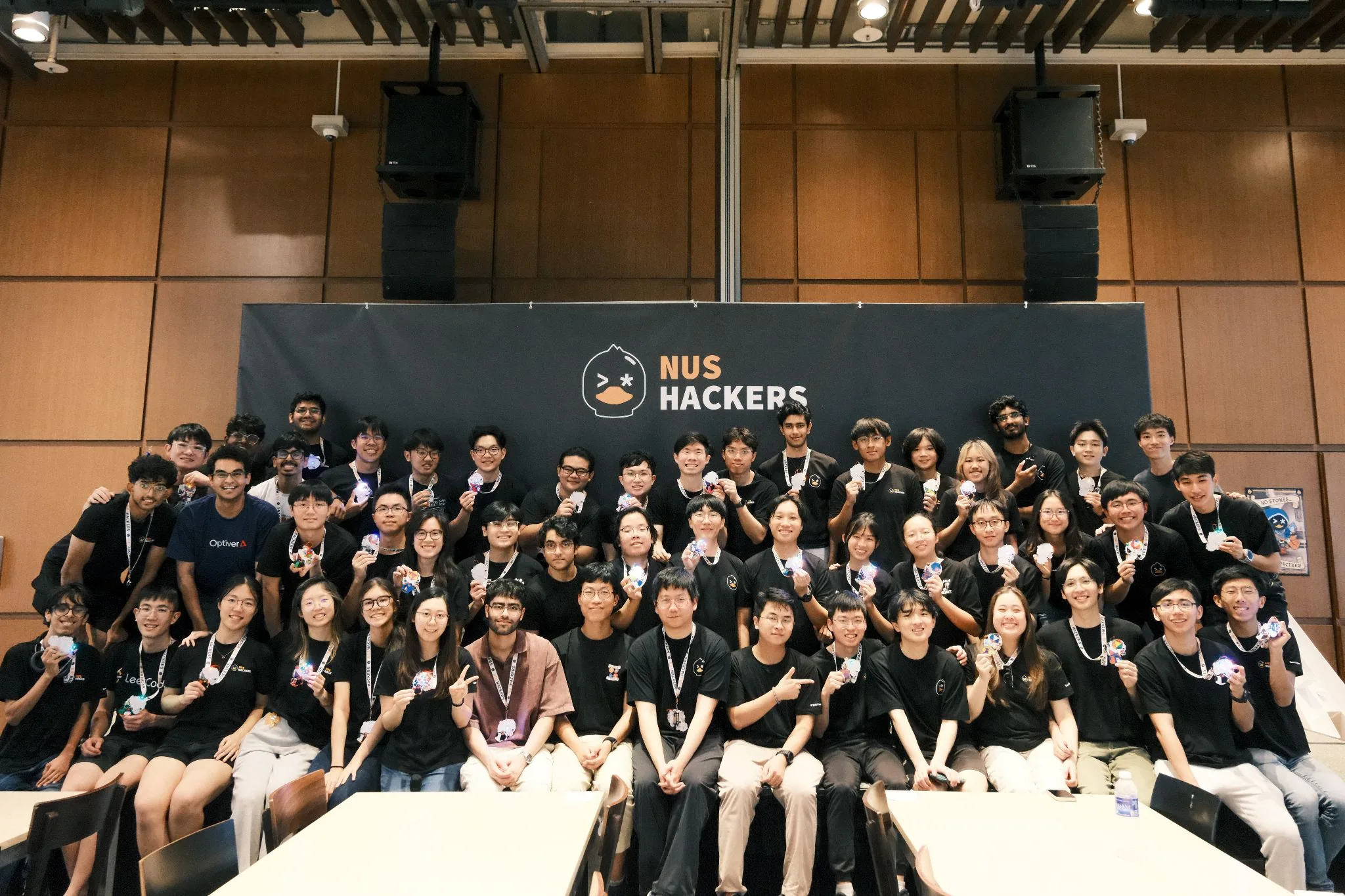
How We Function
Click on each of the workgroups below to see what we mean when we say “I am part of the __________ team”. These are not exhaustive, since there are many small jobs which do not fit cleanly into one team, but they give you a sense of the major moving parts in Hack&Roll and how they come together.
Publicity
Publicity is how people hear about Hack&Roll before they know they want to attend. The Publicity team writes announcements, prepares posts, publicises the workshops, and gets the word out about Hack&Roll. Sending the word out to various different schools and societies is particularly challenging. As it stands, keeping this post short and brief was... a tall order. The team also frequently designs our social media and Telegram posts, condensing all the information to fit on a phone screen.
Registration
Registration is the first workgroup most participants meet. The Registration team handles the registration form, selection, acceptance emails, team appeals and day-of check ins. During Hack&Roll, registration also connects to the Webapp, QR code participant tags, lanyards, and the physical process of getting hundreds of people into the venue without making everyone queue forever. This last part is particularly hard because throwing more people at the problem frequently causes a larger mess and confusion. With such high human traffic and movement, there are bound to be problems. Backup processes are also in place when Supabase (historically Firebase) authentication goes down, or, for example, when the Registration team accidentally tagged badges to the wrong participants in 2025.
Workshops
Workshops happen before the main 24 hours, and are a way for participants to try something before they start building. The Workshops team coordinates instructors, materials, rooms and schedules, including technical workshops where participants get to use hardware they may not have tried before. The 2026 edition included a sneak peak into our PCB badge! The team also updates the Hack&Roll page, publishes the forms, and reminds people who signed up to actually show up. Every workshop is its own small event, so a lot of work goes into making the 2 hour workshop on the schedule look easy. For context, our teams for Friday Hacks and Hackerschool are usually about 3-4 people each and the events are held once a week. In contrast, the Workshops team consists of 2-3 people, and they work everyday tirelessly for 1-2 weeks. They also get ridiculously sick of eating pizza for dinner across consecutive days.
Sponsorship
The food and atmosphere of Hack&Roll only exists because our sponsors help us make them happen. The Sponsorship team reaches out to and works with these sponsors/partners, then coordinates with the rest of us to turn that support into workshops, hardware, food, prizes, and other parts of the event. There is also a lot of followup emails and last minute coordination, which is less visible than simply confirming a sponsor via email, but takes up a lot of time. As an organization working with so many sponsors, we aim to keep the sponsor experience and tiers fair - balancing a fun & enjoyable event, sponsor benefits, and sponsor visibility. The Sponsorship team frequently requires additional contextual knowledge of the entire event to present to sponsors. They serve as the frontdesk of Hack&Roll for companies, providing information about the event where possible. Our context windows are often lesser than AI so we use AI to search other teams' meeting notes, or simply reach out to other coreteam members across pretty much every workgroup.
Venue
The Venue workgroup is in charge of booking all our venues: the main dining hall, side venue halls, ops rooms and logistics storerooms. They are one of the earliest teams to start, because we cannot host 800 in-person participants if we are missing even one of these spaces. There is a surprising amount of planning in deciding not just where people hack, but where food, workshops, judging, hardware and coreteam can all fit. The Venue team also books rooms for the workshops before the main event, which means this work starts long before most participants have heard of Hack&Roll. They also take care of the "physical infra" of the event - this includes tables, chairs, trash bags, power, signage, room setup, and fighting fires throughout the event. During the event, they are usually moving between halls and solving problems before most participants notice them. If a trash bag is suddenly overflowing, this is usually the team that gets activated.
Design
Design is responsible for making Hack&Roll look like Hack&Roll. This includes the posters around the event, but also the registration booth, coffee cart, stickers, shirts, badges, backdrops and other small details that appear everywhere during the weekend. It is easy to only notice design when something looks bad, so the team does a lot of work that participants hopefully never have to think about. I'm sure many of you loved the posters from last year too as we had many people asking us if they could bring them home! Quackers (and our many variations of Quackers) sure enjoy the attention!
Webapp
The Webapp workgroup builds many of the parts of Hack&Roll that people use without thinking about them: registration, the participant dashboard, check in, food and swag collection, judging, and fringe games. It also has to connect to the physical event, where a QR code, tag or scanner is often involved. The team is also regularly asked to remove friction from everyone else's work, whether that means better navigation during registration, syncing the judging system, or making it easier for participants to find information without searching through Discord. The goal is for the normal flow to be boringly simple. Getting the relevant teams to test their workflows is hard when we're scrambling in our other work a week before the event. We frequently have big ideas, but not much time to implement them - perhaps with AI this would change next year! (As it stands, our emails still run on small side scripts, but we probably aren't ready to build a mailing system on our own, and it's probably not a very good idea.)
AV
This year, the AV team invested more effort into AV (audio visual) setup: the sound setup, video projections, and streaming across different venues. The stage backdrop was also initiated by the AV team, and executed by the design team to make the event "fuller". Returning participants may have noticed that the setup was a major step up from previous years. That was possible because the team had both people who already knew the systems and people willing to learn. The AV team even set up its own RTSP server to avoid music copyright strikes when streaming on external services like YouTube. It was a ridiculous number of hurdles, but they kept jumping over them. It's honestly not ridiculously hard, it just takes some time and effort to sit down and play around with the systems.
Food
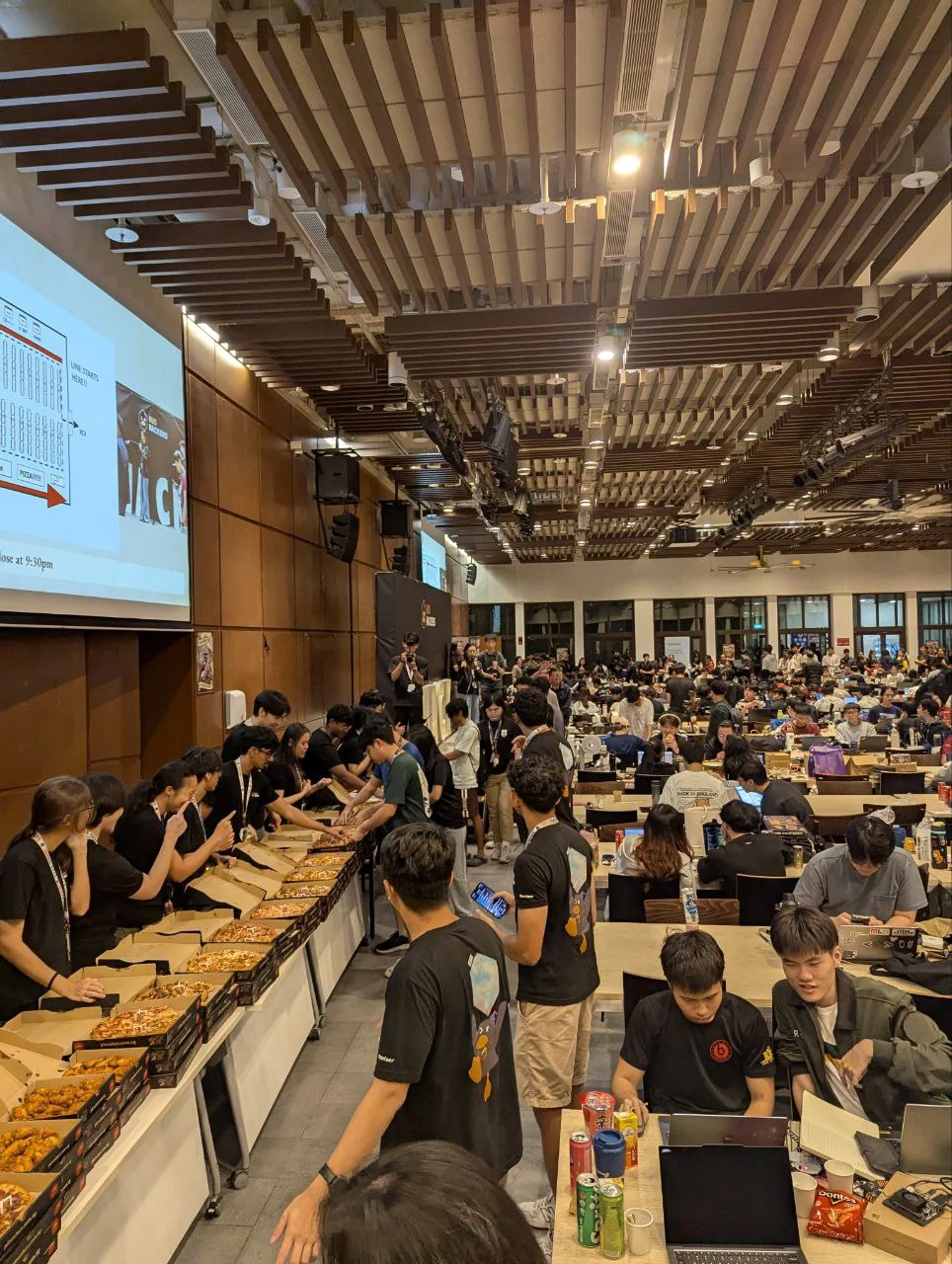
Often the most memorable part of our event is food. However, a lesser known fact is how the Food team ensures sufficient quantity and quality. In true hacker mindset, we enjoy making data-driven decisions. The Food team asks participants to scan their tags / hardware badges for their first portion of food, allowing them to make better informed decisions on how many portions to cater for participants. There's also more to it than just "order food for 800 people", buffet line positioning, timings, etc all have to be factored in. As if that wasn't enough work, the various food carts like coffee and ice cream carts also require independent coordination! Massive thanks to our food team for keeping our tummies full!
Hardware
Hardware used to be solely about loaning equipment to participants, enabling everyone to have an inexpensive way to try random hardware to hack with. In 2026, the Hardware team expanded this into its first custom PCB badge, so participants could not only borrow hardware but also hack on the thing they were wearing. With more than 1000 badges prepared for an event with over 800 participants, this was probably the biggest badgelife event in Singapore at the time. (thanks to the team, including some volunteers who we onboarded earlier, who pulled this off!) The team designed, soldered, flashed, distributed, explained, and supported the badge when people tried to make it do more. It was a lot of work, but seeing participants color and hack on their badges was such a huge W! The team took an L because the badge was rather heavy with the batteries, and they had to hand solder the battery holder and reprogram the NFC on each badge too. But nonetheless, the feedback turned out great!

Fringe Events
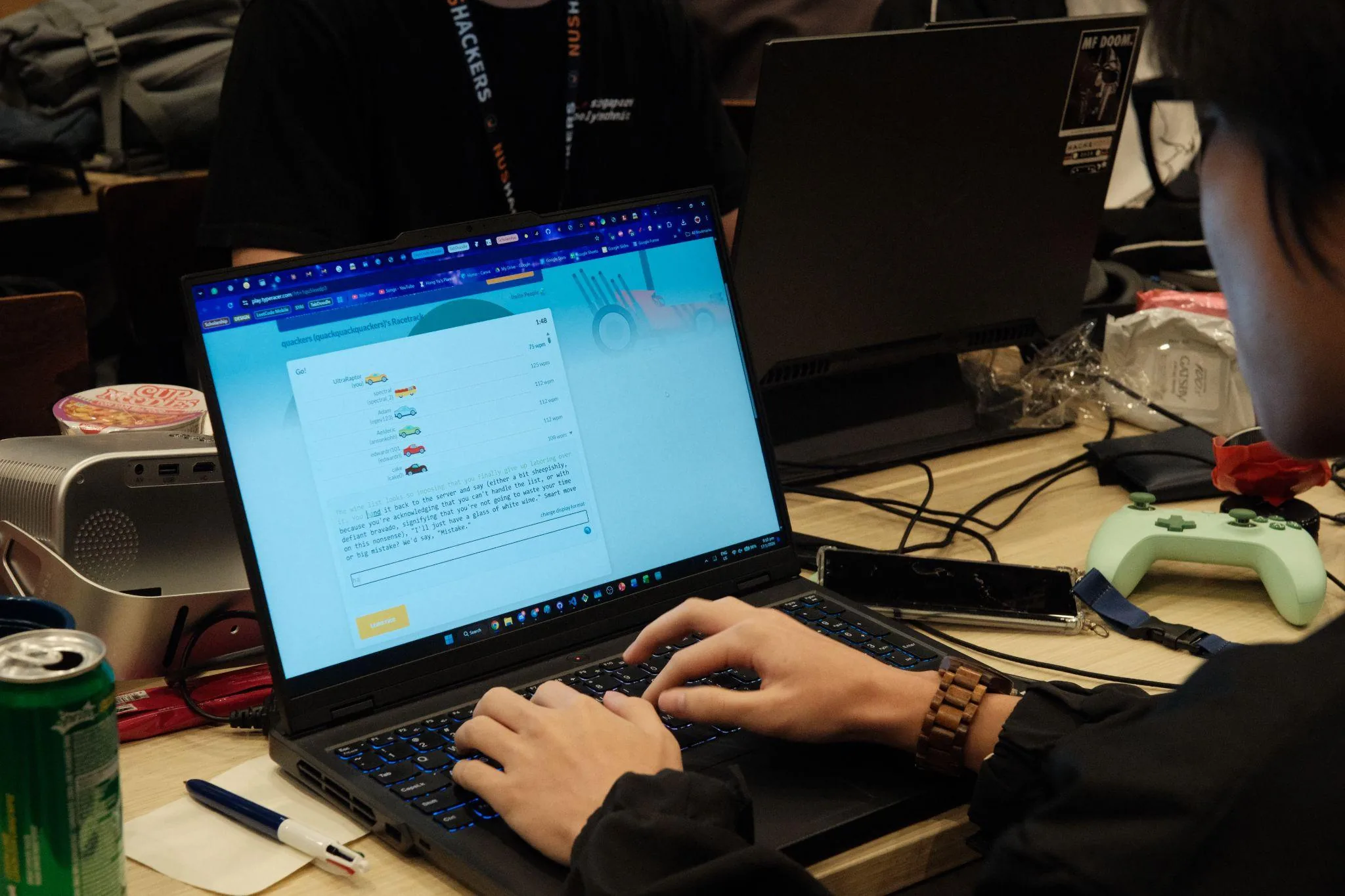
Fringe Events runs the games that let participants take a break from their hacks. Over the years, this has included Tetris, Typeracer, Duck Hunt, Esolang, and board games. Small games and events like this keep the event more lively, especially going into the dreaded 8-12h mark at night when nothing is working and hitting the "I don't feel like coding, I need coffee" period. The team has to handle the game rules, game masters, venues, timings and prizes, which is more work than it sounds like when the plan is simply "let's play Tetris". A common problem is realizing 5 minutes before the event that the free tier cannot accommodate our 800 participants and scrambling for someone with a subscription, or an alternate platform (yes, better hindsight could've been used, but things like that do happen when we've got other stuff to prepare for too!).
Volunteers
We plan Hack&Roll, but the 30+ of us would be unable to run it without our volunteers. Before the event, the Volunteers team prepare the volunteer schedule and briefing. During the event, our volunteers help with registration, food, swag, booths, crowd movement, and all the small tasks that appear when 800 people are in the same place. Many participants also come back as volunteers and experience Hack&Roll as an organizer too.
Judging
This year, the Judging team expanded its work to include multiple venues (3 venues spaced ~30m apart), hundreds of projects, and more than a hundred judges. The team recruits and briefs judges, prepares the modified Gavel and judging system, prints venue maps, and helps judges find the teams' locations. It is also one of the places where the Webapp and Venue teams have to work closely, because moving across venues is not as simple as adding a "venue" indicator on the Gavel app - the Judging team needs to ensure the math checks out too. In much older iterations of Hack&Roll, this was done with a simple scoring rubric on Google Forms, and later expanded to the Gavel system in 2023. The team also optimizes for judging experience, ensuring each team gets judged fairly. We've been gradually expanding this team as it involves such a wide scope from technical development to judges outreach and administrative work.
Prizes
The Prizes team starts planning long before the final prize ceremony. They decide which categories to reward, keep track of the prizes, and work with Judging and Sponsorship so that the awards are ready when the projects are. It sounds straightforward until your order is cancelled one week before the event - with 15+ different orders, this is bound to happen unfortunately.
Swag
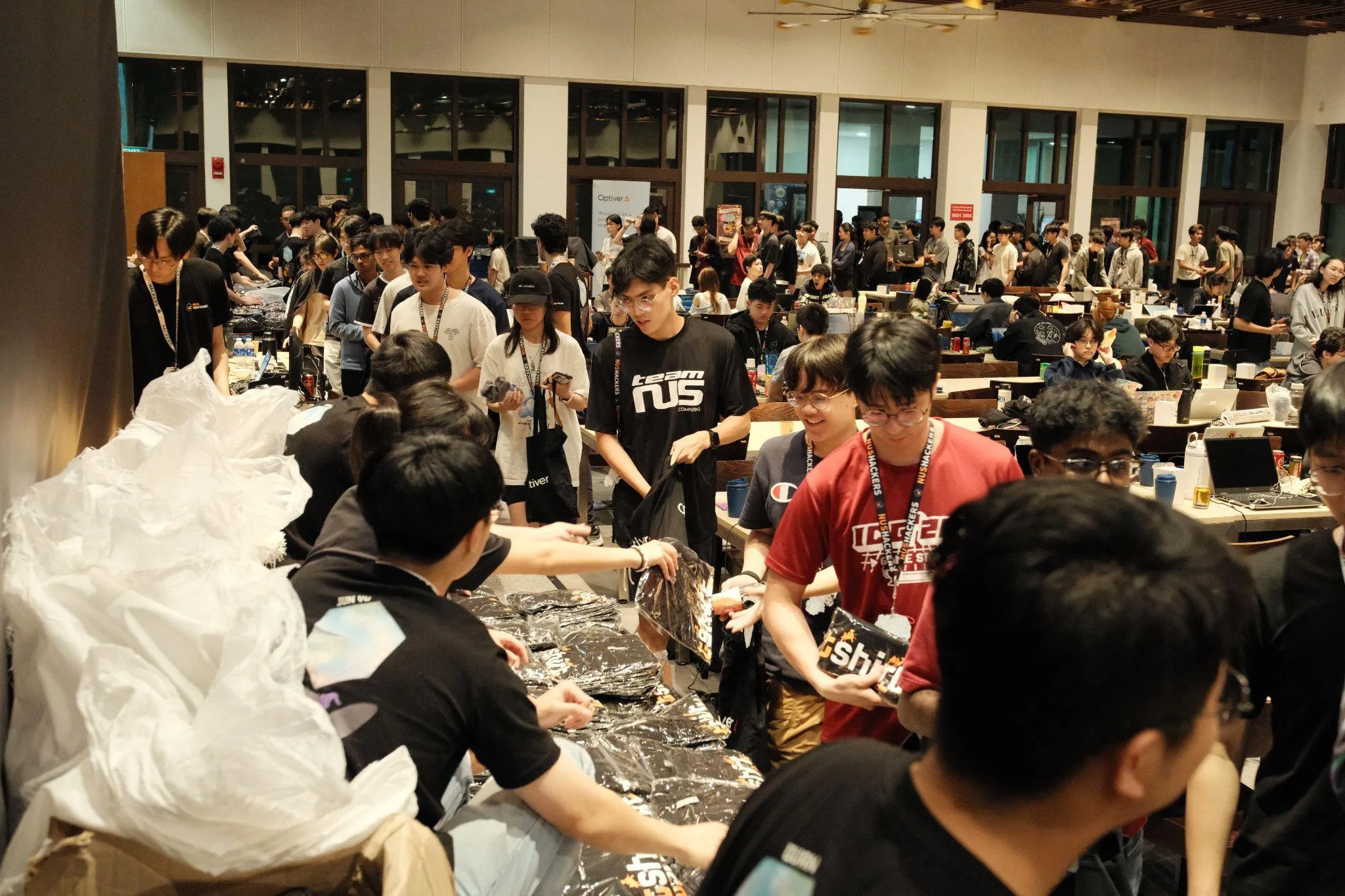
Swag is a surprisingly large physical logistics problem. The Swag team decides what participants receive, coordinates the items arriving, sorts them, moves them to the right venue, and hands them out. Some of it arrives much later than the Swag team would like, which makes the midnight surprise especially exciting for the people who have to pack it. Hack&Roll has enough swag that this can turn into a whole operation by itself, especially when the Swag team tries to give things out fairly without making the collection process take the entire night. Recurring participants would know by now how the long snake forms around the main venue around 23:55 at night, so I guess the midnight surprise isn't so surprising anymore.
What keeps it together
Running Hack&Roll is not about the president organizing coreteam, and then coreteam organizing the event. We run Hack&Roll together, with the president ensuring that communication happens when it needs to. The work is distributed, but we share responsibility and ownership: workgroups have the agency to make decisions, we help outside our usual areas, and we learn what we do not already know. That is how we make such a large event feel welcoming, chaotic, and fun at the same time. On top of that, we do most of our planning on one massive Discord server with all workgroups. This keeps our communication transparent and accountable to each other.
After attending Hack&Roll as a participant for 3 years and serving on coreteam for another 2, I’m still grateful to everyone who makes it happen: past/present/future coreteam members, participants, volunteers, judges, and sponsors. The best part is not simply that we run Singapore’s largest student-run hackathon. It is that Hack&Roll gives people (like you!) a reason to build for fun.